
For many married couples in Bangladesh, the journey to parenthood does not happen as easily as expected. When pregnancy does not occur even after trying for months or years, it brings stress, confusion, and emotional pressure, especially from family and society. This is where IUI treatment (Intrauterine Insemination) becomes a hopeful and practical option.
IUI is one of the most commonly recommended fertility treatments in Bangladesh because it is less invasive, more affordable than IVF, and suitable for many couples facing early-stage infertility issues. With proper diagnosis, expert monitoring, and timely care, IUI can significantly increase the chance of natural conception.
Who Is IUI Recommended For?
IUI is not for everyone, but it works well for many couples when the conditions are right. Doctors usually recommend IUI after understanding both partners’ fertility health.
Unexplained Infertility
In some cases, all fertility tests come back normal, yet pregnancy does not occur. This is known as unexplained infertility. IUI helps by placing prepared sperm directly into the uterus at the right time, increasing the chance of fertilization.
Mild Male Factor Infertility
When sperm count, movement, or shape is slightly below normal—but not severely low—IUI can be effective. The sperm washing process selects healthier, more active sperm for insemination.
Ovulation Disorders
Women who do not ovulate regularly or have a hormonal imbalance may benefit from IUI combined with ovulation-inducing medicines. Monitoring ensures insemination happens at the most fertile time.
Cervical Mucus Issues
Sometimes, thick or hostile cervical mucus blocks sperm from reaching the egg. IUI bypasses the cervix completely, placing sperm directly into the uterus.
Couples with Sexual Dysfunction
For couples facing erectile dysfunction, ejaculation problems, or difficulty with timed intercourse, IUI offers a medical solution without pressure or discomfort.
Who Is NOT Suitable for IUI Treatment?
IUI may not be the right option if:
- Both fallopian tubes are blocked
- Severe male infertility is present
- Advanced endometriosis exists
- Ovarian reserve is very low
In such cases, doctors usually recommend IVF or other advanced treatments instead of repeating failed IUI cycles.
Pre-IUI Evaluation & Required Tests
Before starting IUI treatment in Bangladesh, proper evaluation is essential. Skipping tests often leads to failure and emotional frustration.
Female Fertility Tests
These usually include:
- Pelvic ultrasound (USG)
- Hormone tests (FSH, LH, AMH, TSH, Prolactin)
- Ovulation assessment
- Uterine cavity evaluation
Male Fertility Tests
- Semen analysis
- Sperm count, motility, and morphology evaluation
- Infection screening is required
Fallopian Tube Assessment
A test such as HSG (Hysterosalpingography) is done to confirm at least one tube is open. IUI cannot work if both tubes are blocked.
Infection & Safety Screening
Both partners may be tested for infections to ensure a safe and healthy treatment environment.
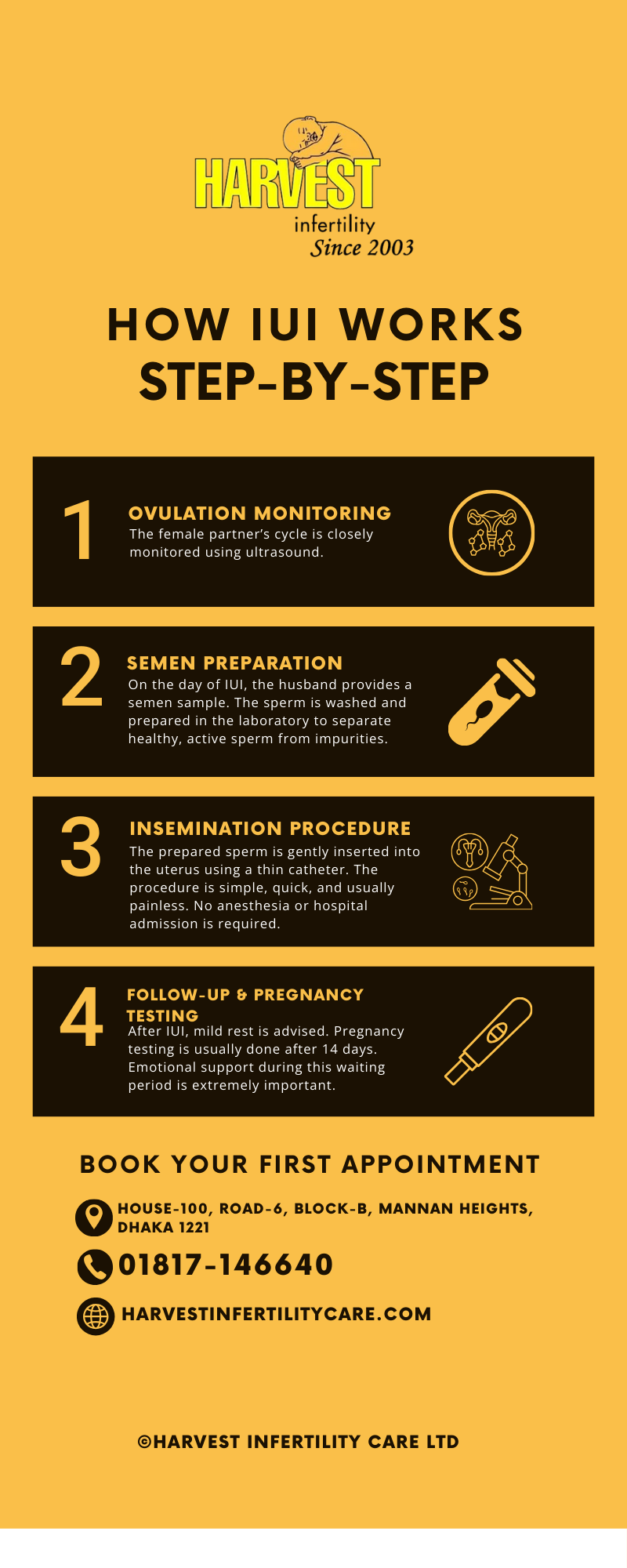
How IUI Works – Step-by-Step
Understanding the process reduces fear and helps couples stay mentally prepared.
Ovulation Monitoring
The female partner’s cycle is closely monitored using ultrasound. Medicines may be given to stimulate egg growth. When the egg is mature, a trigger injection is given to time ovulation accurately.
Semen Preparation
On the day of IUI, the husband provides a semen sample. The sperm is washed and prepared in the laboratory to separate healthy, active sperm from impurities.
Insemination Procedure
The prepared sperm is gently inserted into the uterus using a thin catheter. The procedure is simple, quick, and usually painless. No anesthesia or hospital admission is required.
Follow-up & Pregnancy Testing
After IUI, mild rest is advised. Pregnancy testing is usually done after 14 days. Emotional support during this waiting period is essential.
Medicines Used in IUI Treatment
Medicines play an important role in improving the success of IUI treatment in Bangladesh. However, not every patient needs the same medication. Treatment is always planned based on age, hormone levels, and medical history.
Ovulation induction medicines are commonly used to help the ovaries release one or more healthy eggs. These medicines may be taken orally or through injections, depending on the case. Doctors carefully monitor the response through ultrasound to avoid overstimulation.
A trigger injection is usually given when the egg reaches the right size. This injection helps release the egg at the correct time, so insemination can be perfectly timed.
After the IUI procedure, luteal phase support medicines may be prescribed. These help support the uterine lining and increase the chance of successful implantation.
Most medicines used in IUI are considered safe when taken under medical supervision. Side effects, if any, are usually mild and temporary.
IUI Success Rates & Influencing Factors
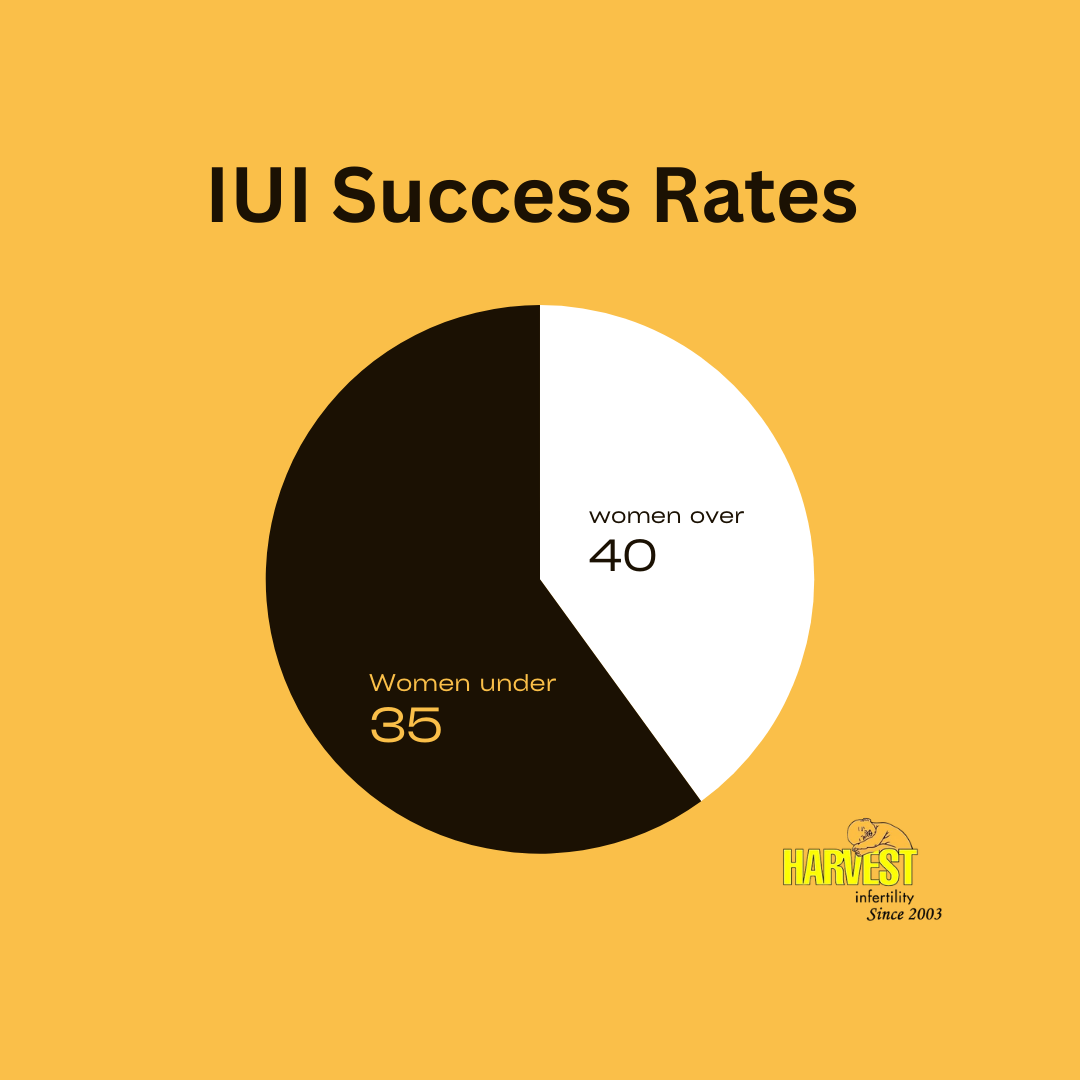
The success of IUI treatment depends on several important factors. While IUI does not guarantee pregnancy, many couples in Bangladesh achieve positive results with proper diagnosis and timing.
Age plays a major role. Women under 35 generally have higher success rates compared to women over 40. Fertility naturally declines with age, which affects egg quality.
The cause of infertility also matters. Couples with unexplained infertility or mild male factor infertility often respond better to IUI. Regular ovulation and healthy sperm significantly increase success.
Success rates usually improve over multiple cycles. Many doctors recommend trying up to three IUI cycles before considering advanced treatments like IVF.
Lifestyle factors such as stress, body weight, smoking, and overall health can also influence outcomes. Emotional support and a positive mindset make the journey easier.
Risks & Side Effects of IUI Treatment
IUI is considered a low-risk fertility treatment. However, like any medical procedure, it may have some minor risks.
Some women experience mild cramping or light spotting after insemination, which usually resolves quickly. Hormonal medicines may cause temporary bloating or mood changes.
There is a small risk of multiple pregnancy if more than one egg is released. Doctors closely monitor egg development to minimize this risk.
Ovarian hyperstimulation syndrome is rare in IUI and usually mild when it occurs. Proper monitoring greatly reduces this possibility.
Emotional stress is often overlooked but very real. The waiting period after IUI can be mentally challenging, and compassionate support is essential.
IUI vs IVF – Which Treatment Is Right for You?
Many couples in Bangladesh wonder whether they should try IUI or move directly to IVF. The choice depends on medical findings and personal circumstances.
IUI is usually recommended when fertility issues are mild, tubes are open, and sperm quality is reasonable. It is less invasive, less expensive, and closer to natural conception.
IVF is advised when IUI fails repeatedly or when more serious fertility problems exist, such as blocked tubes or severe male infertility. IVF has higher success rates but involves more complex procedures and higher costs.
Doctors often suggest starting with IUI before moving to IVF, especially for younger couples or those with unexplained infertility.
Lifestyle & Care Tips During IUI Cycle
Small lifestyle changes can support IUI treatment and improve overall well-being.
A balanced diet rich in fruits, vegetables, protein, and whole grains helps maintain hormonal balance. Staying hydrated and avoiding processed foods is beneficial.
Moderate physical activity is encouraged, but heavy exercise should be avoided during the treatment cycle. Stress management through prayer, meditation, or light walks can be helpful.
Sexual activity guidelines are usually provided by the doctor. Following these instructions carefully improves timing and outcomes.
Travel and office work are generally safe during IUI, but long-distance travel immediately after insemination is usually discouraged.
Why Choose Harvest Infertility for IUI in Bangladesh?
Choosing the right fertility center is one of the most important decisions in your parenthood journey. At Harvest Infertility Care, IUI treatment in Bangladesh is provided with a strong focus on medical accuracy, patient comfort, and emotional support.
Each couple is treated individually. Treatment plans are designed after careful evaluation, not copied from standard protocols. Experienced fertility specialists monitor every step, from ovulation tracking to insemination timing.
The laboratory follows strict quality control for sperm preparation, ensuring healthy and active sperm are selected for insemination. Privacy, respect, and ethical practice are always maintained, which is especially important for couples seeking fertility care in Bangladesh.
Most importantly, patients are guided honestly. If IUI is not the right option, doctors clearly explain alternative treatments instead of encouraging unnecessary cycles.
Cost & Consultation for IUI Treatment in Bangladesh
One of the biggest concerns for couples is the cost of fertility treatment. IUI is generally more affordable than advanced procedures like IVF, making it a preferred first-line treatment in Bangladesh.
The total cost of IUI treatment depends on several factors, including consultation fees, required tests, medicines, and the number of cycles. Some patients may require medication-assisted cycles, while others may proceed with natural cycle IUI.
At Harvest Infertility Care, cost details are explained clearly before starting treatment. There are no hidden charges, and couples are encouraged to discuss financial concerns openly during consultation.
An initial consultation helps doctors understand your medical history and suggest the most appropriate and cost-effective plan.
Patient Experiences & Real Stories
Many couples arrive at fertility clinics feeling anxious and uncertain. Hearing from others who have gone through the same journey brings reassurance.
Patients who have undergone IUI treatment at Harvest Infertility Care often share positive experiences regarding clear communication, respectful behavior, and careful monitoring. Some conceive in the first cycle, while others succeed after a few attempts.
What matters most is that patients feel supported medically and emotionally throughout the process. Trust between doctor and patient plays a major role in treatment success.
Frequently Asked Questions About IUI Treatment
How many IUI cycles are usually needed?
Most doctors recommend trying up to three IUI cycles before considering other treatments. Some couples conceive earlier, while others may need more evaluation.
Is IUI painful?
IUI is generally painless. Some women feel mild discomfort, similar to a routine gynecological exam.
What happens if IUI fails?
If pregnancy does not occur, doctors review the cycle and may adjust medicines or recommend further tests. If multiple cycles fail, IVF may be advised.
What is the next step after IUI?
The next step depends on the cause of infertility and age. Options may include repeating IUI or moving to IVF.
What are the success rates for IUI?
Success rates vary depending on age, fertility condition, and overall health. Younger women and couples with mild infertility issues tend to have better outcomes.
Is bed rest required after IUI?
Extended bed rest is not necessary. Normal daily activities can usually be resumed, as advised by the doctor.
Can IUI guarantee pregnancy?
No fertility treatment can guarantee pregnancy. IUI improves the chances but does not offer a 100% guarantee.
Book an IUI Consultation in Bangladesh
If you are considering IUI treatment in Bangladesh, the first step is a proper medical consultation. Early evaluation helps avoid unnecessary delays and emotional stress.
During your first visit, bring previous medical reports if available. Both partners are encouraged to attend, as fertility treatment is a shared journey.
At Harvest Infertility Care, consultations are conducted in a supportive, confidential environment where questions are always welcome. Taking the right step at the right time can make a meaningful difference in your journey toward parenthood.
Book your first appointment today: 01817-146640