
For many couples in Bangladesh, infertility is not just a medical issue—it is an emotional journey filled with hope, pressure, and unanswered questions. When pregnancy does not happen naturally or after simpler treatments, couples often start looking for a more effective solution. This is where IVF treatment (In Vitro Fertilization) becomes an important option.
IVF treatment in Bangladesh has become more accessible in recent years, with advanced medical facilities and trained fertility specialists available locally. It offers hope to couples facing complex fertility problems and has helped thousands achieve successful pregnancies when other methods failed.
Choosing IVF does not mean giving up—it means taking a medically guided step toward parenthood with proper planning, care, and support.
What Is IVF Treatment?
IVF, or In Vitro Fertilization, is a fertility treatment where eggs and sperm are combined in a laboratory instead of inside the body. Once fertilization occurs, the resulting embryo is carefully monitored and then placed into the woman’s uterus to achieve pregnancy.
Unlike natural conception, IVF allows doctors to closely observe egg quality, sperm health, and embryo development. This makes it especially helpful for couples with fertility conditions that prevent natural fertilization.
In Bangladesh, IVF is often recommended after failed IUI cycles or when specific medical problems make natural conception difficult.
Who Is IVF Recommended For?
IVF is usually advised when fertility challenges are more complex or long-standing.
Blocked or Damaged Fallopian Tubes
If one or both fallopian tubes are blocked or severely damaged, sperm cannot meet the egg naturally. IVF bypasses the tubes entirely, making pregnancy possible.
Severe Male Factor Infertility
When sperm count, movement, or shape is very poor, natural fertilization becomes unlikely. IVF, especially with ICSI, helps achieve fertilization even with limited healthy sperm.
Repeated Failed IUI Cycles
Couples who do not conceive after several properly timed IUI cycles are often advised to move to IVF for better success chances.
Endometriosis
Moderate to severe endometriosis can affect egg quality, ovulation, and implantation. IVF improves the chances by controlling fertilization and embryo transfer.
Low Ovarian Reserve
Women with reduced egg quantity or quality may benefit from IVF, where available eggs are used carefully under close monitoring.
Advanced Maternal Age
As age increases, fertility naturally declines. IVF allows better timing and selection of embryos, which can be helpful for women in their late 30s or 40s.
Unexplained Infertility
When all tests appear normal, but pregnancy still does not occur, IVF helps overcome hidden fertilization or implantation issues.
Who May Not Be Suitable for IVF?
IVF may not be recommended in certain situations, such as serious medical conditions that make pregnancy unsafe or when ovarian function is extremely low. In such cases, doctors may discuss alternative options, including donor programs or other supportive treatments.
Honest counseling is essential so couples can make informed decisions without emotional or financial strain.
Pre-IVF Evaluation & Required Tests
Before starting IVF treatment in Bangladesh, thorough testing is essential to ensure safety and improve success rates.
Female Fertility Tests
These commonly include:
- Hormone tests to assess ovarian reserve
- Pelvic ultrasound to examine the ovaries and uterus
- AMH and baseline hormone levels
These tests help doctors understand egg quantity, ovulation pattern, and uterine readiness.
Male Fertility Tests
- Semen analysis
- Assessment of sperm count, motility, and structure
- Additional tests if severe male infertility is suspected
Genetic & Infection Screening
Screening helps reduce the risk of genetic disorders and infections that could affect pregnancy or the baby’s health.
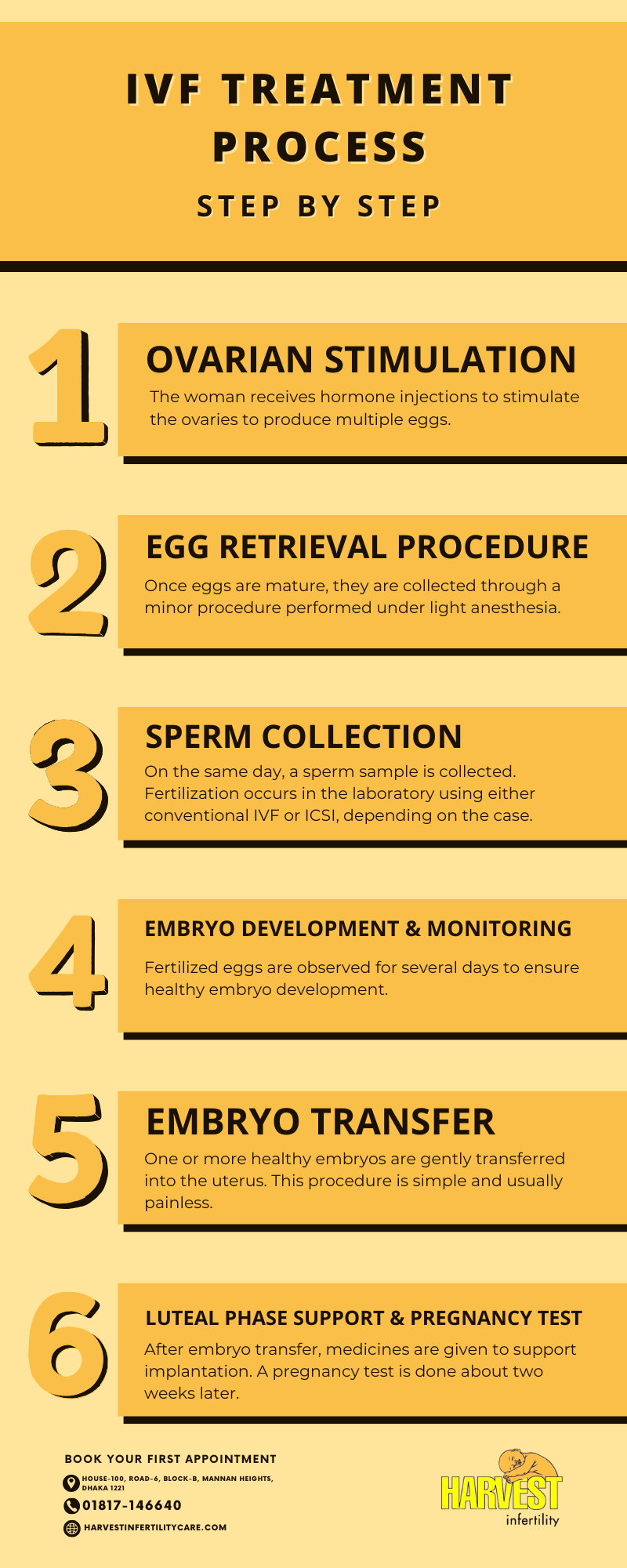
IVF Treatment Process – Step by Step
Understanding the IVF process helps couples feel mentally prepared and confident.
Ovarian Stimulation
The woman receives hormone injections to stimulate the ovaries to produce multiple eggs. Regular ultrasound and blood tests are done to monitor egg growth.
Egg Retrieval Procedure
Once eggs are mature, they are collected through a minor procedure performed under light anesthesia. It is usually completed within a short time.
Sperm Collection & Fertilization
On the same day, a sperm sample is collected. Fertilization occurs in the laboratory using either conventional IVF or ICSI, depending on the case.
Embryo Development & Monitoring
Fertilized eggs are observed for several days to ensure healthy embryo development.
Embryo Transfer
One or more healthy embryos are gently transferred into the uterus. This procedure is simple and usually painless.
Luteal Phase Support & Pregnancy Test
After embryo transfer, medicines are given to support implantation. A pregnancy test is done about two weeks later.
Types of IVF Treatments Available in Bangladesh
IVF treatment is not the same for every couple. Based on medical findings, doctors may recommend different IVF techniques to improve the chances of success.
Conventional IVF
In conventional IVF, eggs and sperm are placed together in the laboratory, allowing fertilization to occur naturally. This method is suitable when sperm quality is normal, and there are no major male factor issues.
ICSI (Intracytoplasmic Sperm Injection)
ICSI is used when sperm count or movement is very low. A single healthy sperm is injected directly into the egg. This technique has helped many couples in Bangladesh with severe male infertility achieve pregnancy.
Frozen Embryo Transfer (FET)
In FET, embryos created during a previous IVF cycle are frozen and transferred later. This allows the woman’s body to recover and often provides better conditions for implantation.
Blastocyst Transfer
Instead of transferring embryos at an early stage, blastocyst transfer involves growing embryos for five days before transfer. This helps select stronger embryos and may improve success rates.
IVF with Donor Eggs or Sperm
When egg or sperm quality is extremely poor, donor options may be considered. This is always discussed with sensitivity and full medical counseling.
Embryo Freezing & Fertility Preservation
Embryo freezing allows couples to preserve embryos for future use. This option is helpful for medical reasons or family planning.
IVF Success Rates & Influencing Factors
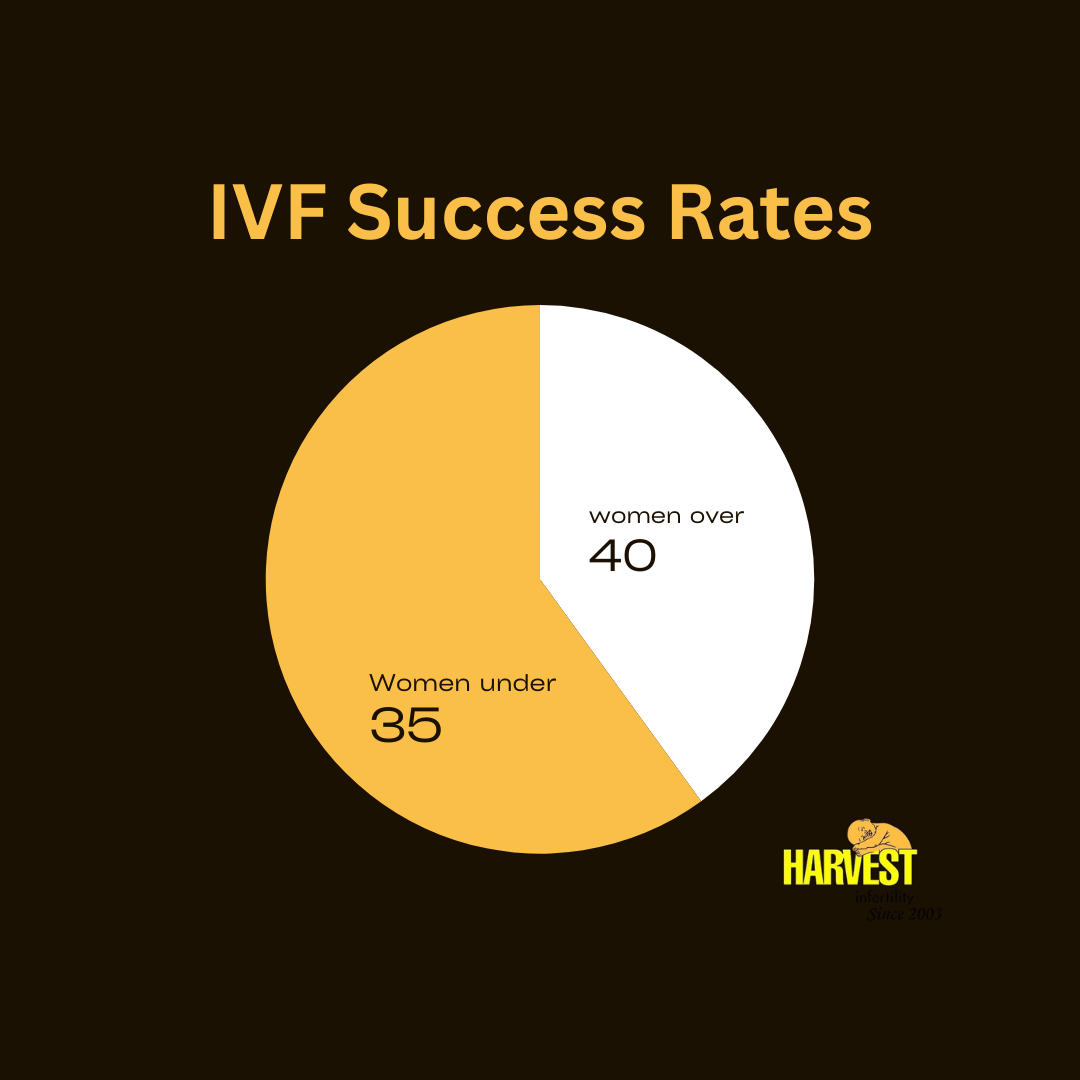
IVF success rates vary from person to person. While IVF offers higher success compared to other fertility treatments, outcomes depend on several factors.
Age remains the most important factor. Women under 35 generally experience higher success rates, while success gradually decreases with age.
The underlying cause of infertility also affects outcomes. Couples with tubal issues or male factor infertility often respond well to IVF, while cases involving poor egg quality may require more careful planning.
Embryo quality, uterine health, and lifestyle habits such as smoking, weight, and stress levels also influence results. Many couples achieve success after more than one IVF cycle, and doctors often guide patients with realistic expectations.
Risks & Side Effects of IVF Treatment
IVF is a well-established medical procedure, but it does involve certain risks that patients should understand.
Hormonal medicines may cause temporary bloating, breast tenderness, or mood changes. These effects usually disappear after treatment.
Ovarian hyperstimulation syndrome can occur in rare cases, especially when the ovaries respond strongly to stimulation. Careful monitoring significantly reduces this risk.
There is also a higher chance of multiple pregnancy if more than one embryo is transferred. Doctors aim to balance success with safety by recommending the appropriate number of embryos.
Emotional stress is common during IVF. Anxiety during the waiting period and fear of failure can be challenging, making emotional support an important part of care.
IVF vs IUI – Which Treatment Is Right for You?
IUI and IVF serve different purposes in fertility treatment.
IUI is usually recommended for mild infertility issues and is less invasive and more affordable. IVF is advised when fertility problems are more complex or when IUI has failed.
While IVF has higher success rates, it also involves more procedures, time, and cost. Doctors often suggest starting with simpler treatments before moving to IVF, unless medical conditions clearly indicate otherwise.
Choosing between IUI and IVF should always be based on proper medical evaluation rather than pressure or fear.
IVF Cost in Bangladesh
One of the most common concerns for couples considering IVF treatment in Bangladesh is cost. IVF is more expensive than basic fertility treatments, but it also offers higher success rates for complex infertility cases.
The total cost of IVF depends on several factors, including the type of IVF technique used, required tests, medicines, laboratory procedures, and the number of cycles needed. Some couples may require ICSI, frozen embryo transfer, or additional monitoring, which can affect the overall expense.
At reputable fertility centers, cost details are explained clearly before treatment begins. Couples are encouraged to discuss financial planning during consultation so that treatment decisions are made with clarity and confidence.
Lifestyle & Care Tips During IVF Treatment
Lifestyle plays an important supportive role during IVF treatment.
A balanced diet that includes fresh vegetables, fruits, lean protein, and whole grains helps maintain hormonal balance. Adequate sleep and hydration are equally important.
Light physical activity, such as walking,g is generally encouraged, while heavy exercise should be avoided during stimulation and after embryo transfer. Stress management is essential, as emotional well-being can affect the overall experience.
Doctors usually provide clear guidance regarding work, travel, and sexual activity during different stages of IVF. Following these instructions carefully helps avoid unnecessary complications.
Why Choose Harvest Infertility for IVF Treatment in Bangladesh?
Choosing a fertility center is not just about technology—it is about trust, transparency, and personalized care. At Harvest Infertility Care, IVF treatment is approached with medical precision and emotional understanding.
Experienced fertility specialists design treatment plans based on individual medical findings rather than fixed protocols. Advanced laboratory facilities support accurate fertilization, embryo culture, and preservation.
Patients receive clear explanations at every stage, allowing them to make informed decisions without pressure. Privacy, ethical practice, and patient comfort remain a priority throughout the IVF journey.
Patient Experiences & Real Stories
Every IVF journey is different. Some couples succeed in their first cycle, while others may need more than one attempt. What patients often value most is honest guidance, consistent communication, and emotional support.
Many couples share that understanding the process and having realistic expectations helped them cope better with the ups and downs of treatment. Supportive care makes the journey more manageable, regardless of the outcome.
Frequently Asked Questions About IVF Treatment
Is IVF painful?
Most IVF procedures involve minimal discomfort. Egg retrieval is done under light anesthesia, and embryo transfer is usually painless.
How many IVF cycles are usually needed?
Some couples conceive in the first cycle, while others may need multiple attempts. This depends on age and medical condition.
Can IVF guarantee pregnancy?
No fertility treatment can guarantee pregnancy. IVF improves the chances significantly but cannot promise success.
Is IVF safe in Bangladesh?
When performed by trained specialists using proper medical protocols, IVF is considered safe.
Can IVF select a baby’s gender?
Gender selection for non-medical reasons is not permitted and is not ethically practiced.
What happens if IVF fails?
If IVF does not succeed, doctors review the cycle and discuss possible next steps or alternative approaches.
Book an IVF Consultation in Bangladesh
Taking the first step toward IVF treatment can feel overwhelming. A proper consultation helps couples understand their fertility status, treatment options, and realistic expectations.
Both partners are encouraged to attend the initial consultation and bring previous medical reports if available. Early evaluation often saves time, emotional stress, and unnecessary treatment attempts.
At Harvest Infertility Care, consultations are conducted in a respectful and confidential environment, ensuring couples feel supported from the very beginning of their journey.
Book your first Appointment: 01817-146640